← Back to the blog · July 27, 2026
How does an online school work? A school day at Open Montessori
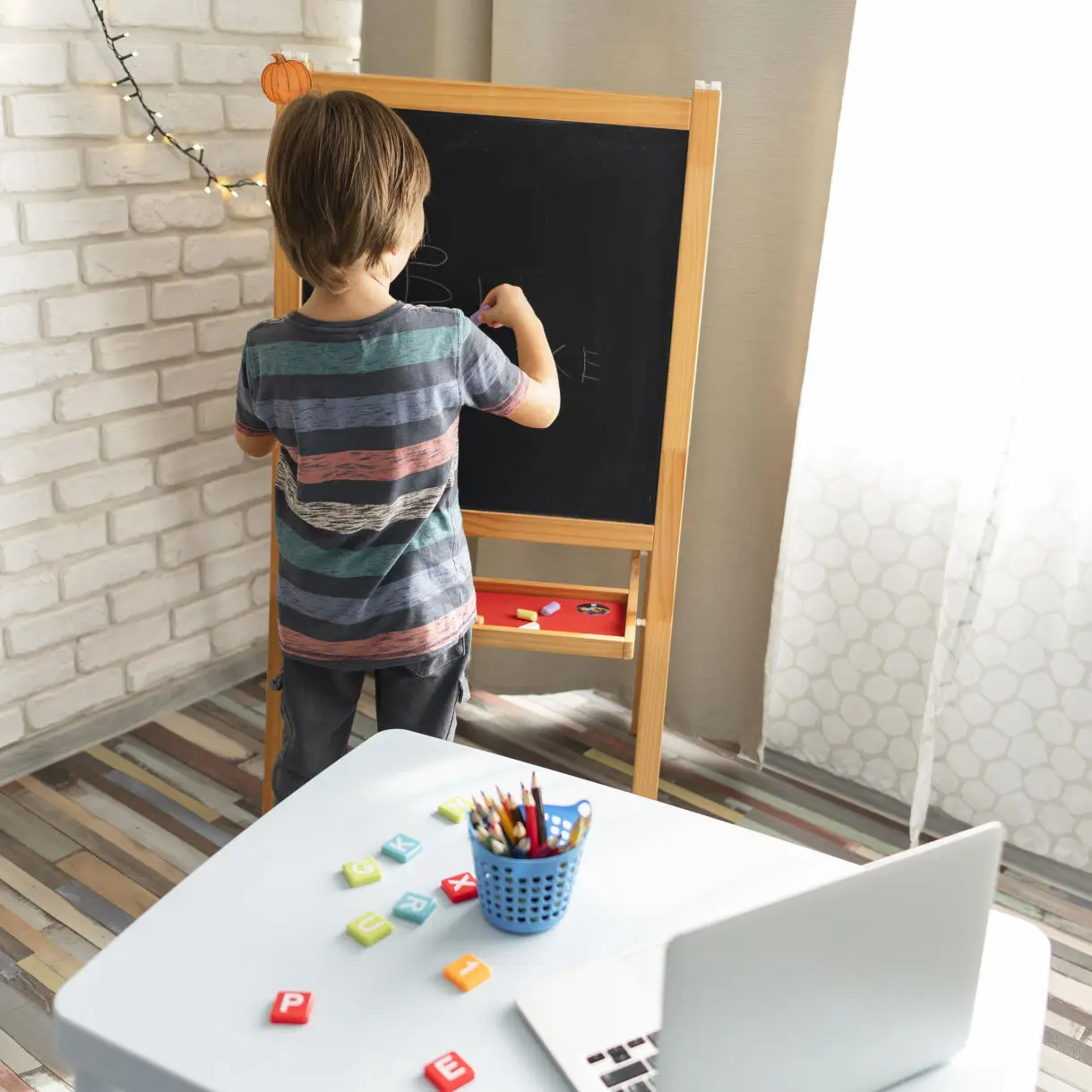
"What is a normal day like?" It is the question families evaluating an online school ask us most often. And it is the right one: brochures talk about methodologies, but school life happens in the daily routine. In this article we tell you, hour by hour, what a real day of an Open Montessori student looks like.
The morning: live classes in groups of up to 11
Classes take place on Google Meet, live and with cameras and microphones on. They are not pre-recorded videos or an adult talking to forty muted rectangles: with a maximum of 11 students per class, everyone participates, asks and talks. The Guide (Teacher) greets each child by name, picks up the previous day's work and presents the day's challenges.
Mid-morning: hands-on work, away from the screen
Here is the most visible difference with other online schools: a good part of the learning happens without a screen. Each student has at home physical Montessori materials we ship to their door, plus printable activities and hands-on work designed for each class. The child manipulates, builds, writes and experiments; the screen is the meeting point, not the place where everything is learned.
The individual work plan
Each child advances with their own work plan, adjusted to their real level rather than the class average. The Guide observes in class, records progress in our SchoolXD management platform and adapts the activities: if a child has already mastered fractions, they do not repeat; if they need more time with reading, they have it without feeling behind.
The afternoon: extracurricular workshops
In the afternoons we offer art, movement and interest-based workshops that complete the day: they are also live, in small groups, and they are one of our students' favorite socialization spaces. Children share with classmates from other levels and develop skills that boost academic learning.
Complementary study: EducaXD
Outside classes, students have EducaXD, our AI learning platform created by the OM team itself: it adapts content, language and pace to each child, in a 100% safe environment supervised by the family and the Guides. It supports study; it never replaces the Guide or the family.
Assessment and free exam preparation
In Chile, online school students validate their studies by taking free exams before the Mineduc once a year. At OM, preparation is built into the routine: the work plan covers the national curriculum, mock exams are held and each child is emotionally supported so they arrive calm. The result: a 100% pass rate among the students who have taken them.
What does your family need to start?
- A stable internet connection and a computer or tablet with a camera.
- A quiet workspace: a clear table and a shelf for the materials are enough; we guide you to prepare it.
- Adult support according to age: the youngest need an adult nearby; older children work with growing autonomy.
- A willingness to participate: at OM the family is an active part of the project, with guidance from the Guides and support from our psychologist.
What makes OM different
Many online schools are, in practice, a video channel with tests. Open Montessori is a living school: groups of up to 11, specialized Guides who know each child, concrete materials at home, afternoon workshops and proprietary technology designed for childhood. If you want to see it in action, book a presentation or read why families choose us.
Frequently asked questions
How many hours a day is the child in front of the screen?
Less than you imagine: live classes are the meeting point, and a large part of the daily work is done offline with concrete materials and printable activities. The balance between screen and hands is a design principle of our school day.
What happens if my child misses a class?
With groups of up to 11, the Guide notices the absence immediately and coordinates with the family how to catch up: the individual work plan makes it possible to adjust the week without the child falling behind.
Do parents have to be present during classes?
It depends on the age: at the early levels it helps for an adult to be nearby; from Workshop I onward children work with growing autonomy. The Guides advise each family on the right support for each stage.