← Back to the blog · July 8, 2026
Neuroscience and learning: what science says about the Montessori method
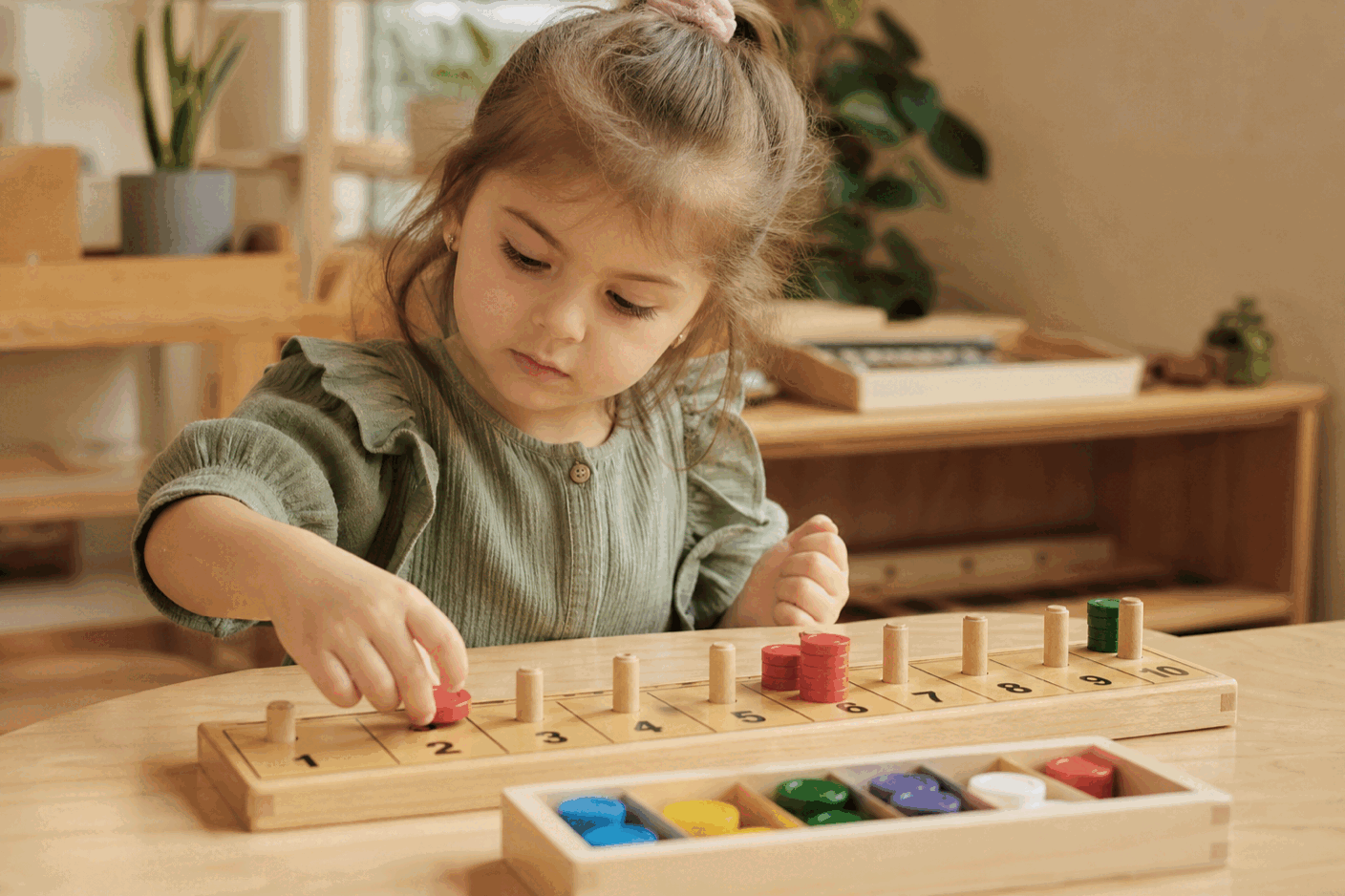
Every year neuroscience publishes new findings about how the human brain learns. And something fascinating happens: much of what laboratories confirm today with MRI scans and longitudinal studies, María Montessori had already observed in children more than a century ago, with the sole tool of patient observation. Today science is proving her right.
1. The body learns: movement and cognition go together
Neuroscience has shown that movement and learning are intimately connected. Manipulating objects with the hands activates neural networks that fix concepts better. That's why Montessori teaches mathematics with beads and letters with rough surfaces: the child doesn't just see the idea, they live it with their body.
2. Sensitive periods and brain plasticity
Montessori spoke of "sensitive periods": windows of time in which the child learns certain things with extraordinary ease. Neuroscience today calls this brain plasticity and confirms that there are optimal moments for language, order or movement. Taking advantage of those windows, instead of forcing content out of time, makes learning more natural and lasting.
3. Deep concentration strengthens the brain
When a child immerses themselves in an activity without interruptions, they train their executive functions: attention, self-control and planning, keys to academic and life success. The Montessori classroom protects those long work cycles, the exact opposite of the constant fragmentation of stimuli that today hinders attention.
4. Error as part of learning
The brain learns by making mistakes and correcting them. Montessori materials have a control of error: the child themselves detects the mistake and resolves it, without depending on an adult's correction. This reduces the fear of making mistakes and consolidates learning autonomously, just as the science of learning describes.
5. Emotion and learning are inseparable
You don't learn well under stress or fear. Affective neuroscience confirms that an emotionally safe environment facilitates memory and motivation. Respect, calm and the bond with the Guide are not an ornament: they are conditions for the brain to be able to learn.
What we do at OM
At Open Montessori we apply these science-backed principles: we send concrete materials home so that learning passes through the hands, we respect each child's pace and sensitive periods, and we protect uninterrupted work cycles. Century-old pedagogy and current neuroscience, hand in hand. If you want to learn about it in detail, schedule your presentation.